

Advanced, open control for high‑performance water source heat pump systems
The i‑Vu® Open WSHP Controller (OPN‑WSHPM) delivers precise, energy‑efficient control of water source heat pumps with open‑protocol flexibility, advanced comfort and humidity management, and seamless integration into the Carrier i‑Vu® Building Automation System.
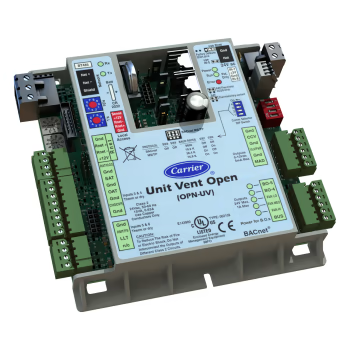
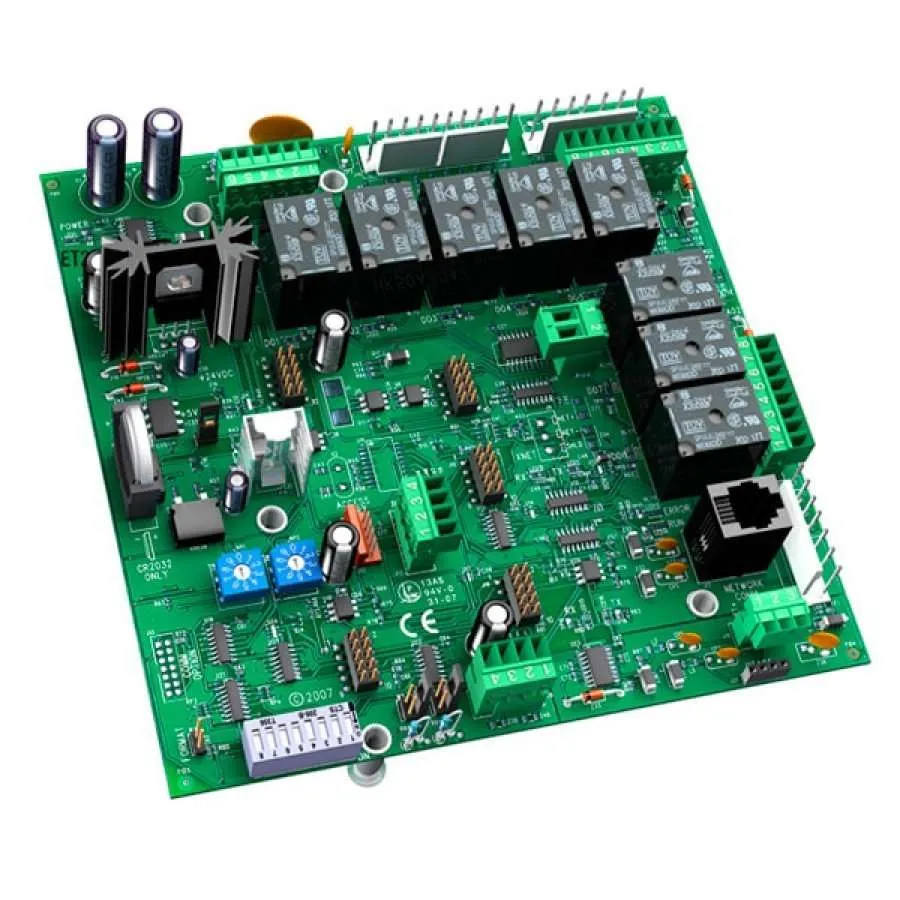
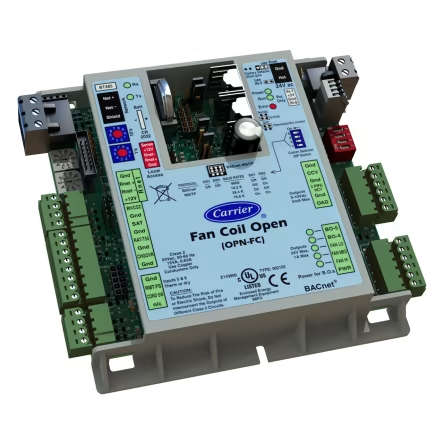
Carrier’s WSHP Open controller is an integrated component of a Carrier water source heat pump. The WSHP Open controller continuously monitors and regulates water source heat pump operation with reliability and precision. This advanced controller features a sophisticated, factory-engineered control algorithm that provides optimum performance and energy efficiency. The WSHP Open controller also features plug-and-play connectivity to the Carrier i-Vu System. The Carrier i-Vu System combines state-of-the-art Carrier equipment, plug-and-play controllers, and the powerful, web-based i-Vu user interface to form a cohesive, intuitive, and fully-integrated BACnet® Building Automation System.
For added flexibility, the WSHP Open controller is capable of stand-alone operation. Or, it can be integrated with any Building Automation System utilizing the BACnet, Modbus, or N2 protocols.
Advanced Application Controller (BACnet B‑AAC, Annex L compliant)
BACnet MS/TP, Modbus RTU, and N2 (DIP switch selectable)
Optional LON via communication option card
Analog inputs for humidity, IAQ, SAT, and condenser water temperature
Binary inputs for compressor status, condensate overflow, fire/smoke, and fan status
Analog outputs for outside air damper and reheat/economizer
Binary outputs for fan speeds, compressors, reversing valve, heat, and dehumidification
24 VAC Class 2 power, battery‑backed real‑time clock, surge‑protected solid‑state circuitry
It is designed for water source heat pumps, including Carrier Aquazone™ horizontal and Puron® vertical units.
Yes. It supports BACnet, Modbus, and N2, allowing integration into open BAS environments.
Yes. With its onboard clock, occupancy input, and sensor support, it can operate in stand‑alone mode.
Through demand limiting, economizer optimization, fan modulation, and advanced ventilation and humidity control.