
 Australia
 New Zealand
 Greece
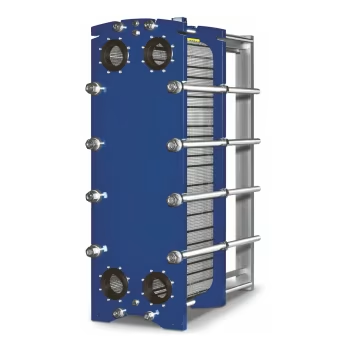
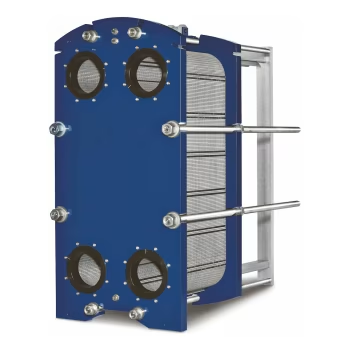
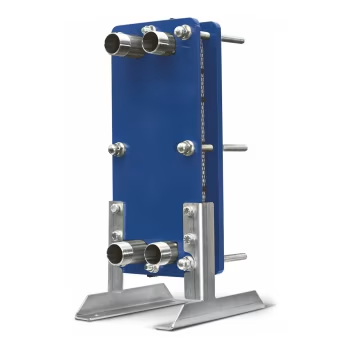
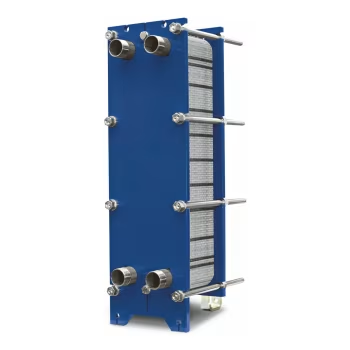
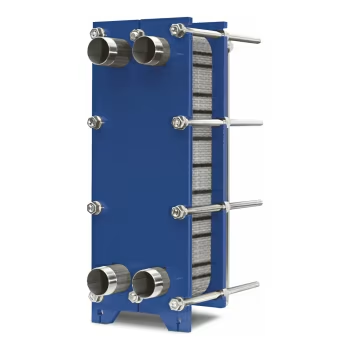
Compact, high‑efficiency heat transfer with easy maintenance and future expandability
The 10TE Gasketed Plate Heat Exchanger delivers excellent thermal performance in a compact footprint. Designed for heating and cooling applications requiring high efficiency, low fluid volume, and service flexibility, it offers reliable operation with the ability to expand capacity as system needs evolve.
Lorem ipsum dolor sit amet, consectetur adipiscing elit, sed do eiusmod tempor incididunt ut
Lorem ipsum dolor sit amet, consectetur adipiscing elit, sed do eiusmod tempor incididunt ut
Lorem ipsum dolor sit amet, consectetur adipiscing elit, sed do eiusmod tempor incididunt ut
Lorem ipsum dolor sit amet, consectetur adipiscing elit, sed do eiusmod tempor incididunt ut
| Document Name | Description | Document Type | Language | Action |
|---|---|---|---|---|
| 10TE Brochure | English | Download |
Our experts can help you choose the right commercial, residential, or light commercial HVAC solution from Carrier, Toshiba, and Viessmann.
ahi@ahi-carrier.com
+971 650 45700
Sharjah Research Technology and Innovation Park First Floor, Wing B – Sharjah United Arab Emirates
Fields marked * are required. We respond within one business day.